

Home/Sectors/Sanctions & compliance
AIS data for sanctions compliance, with the reception record attached.
Positions from our own independent receivers, delivered into the vessel screening and Know Your Vessel checks you already operate, or held as an independent second source where a dark activity or spoofing finding must withstand regulatory examination.
10 yrs
Records OFAC requires you to keep, doubled from five in 2025
$6.1M
Settled by one freight and logistics group
2,958
Apparent violations behind that single settlement
$1.1M
Settled separately by a shipping operator
OFAC tells insurers, brokers, port authorities and their banks to watch for “spoofing, which manipulates a ship’s automatic identification system (AIS) location data.” You are required to audit an instrument that carries no authentication of its own. That is the gap we close.
US Treasury, OFAC maritime sanctions compliance guidance, 31 October 2024, and OFAC civil penalties and enforcement informationMaritime sanctions screening data you can reproduce under examination.
Most AIS data reaches compliance teams as a conclusion. A conclusion that cannot be independently reproduced carries little weight under examination.
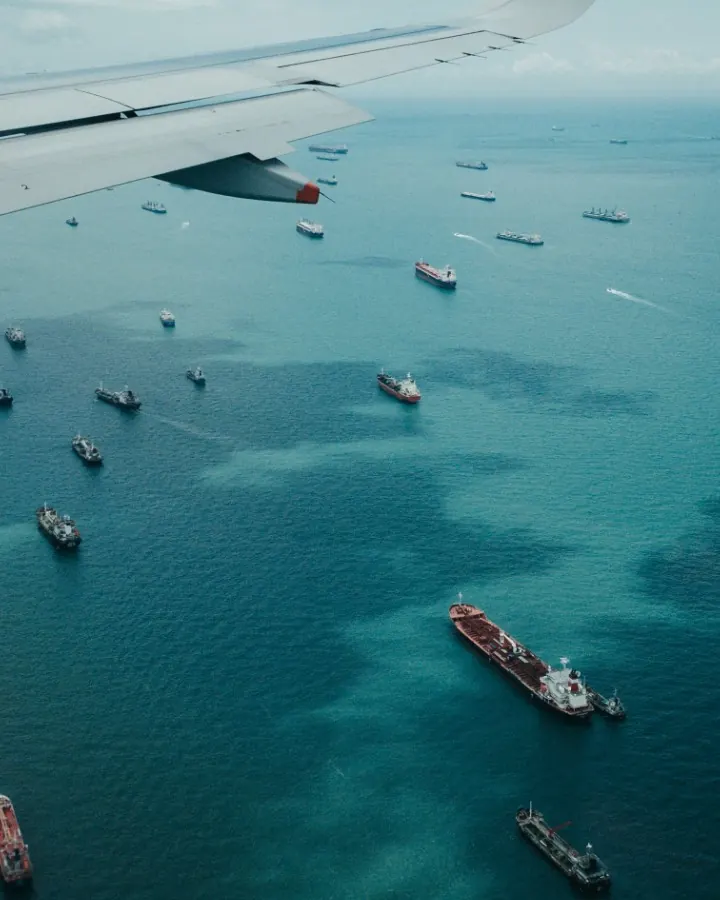
Findings arrive without their evidenceA screening platform reports that a vessel went dark off the Kerch Strait, or that its reported position is inconsistent with its track. The analyst must then decide whether to escalate, hold a payment or decline a fixture, with no access to the underlying reception data on which that finding rests.
Interference and evasion present identicallySustained GNSS interference across the Baltic and the Black Sea causes compliant vessels to present as though they are manipulating position, while genuine deceptive shipping practices occur within the same conditions. Distinguishing between them is a question about the reception layer, and it accounts for a substantial share of alert adjudication effort.
We supply the evidence, not the conclusionWe operate our own terrestrial and ship-borne receivers, with satellite feeds for open ocean, and each message is encrypted at the point of capture. What you receive is the reception event itself: the originating receiver, a nanosecond timestamp and a trust score. First, second and third line functions can each reconstruct the same finding independently.
Send us an IMO and a date rangeWe return every position our own network collected for that vessel over that window, with station attribution, nanosecond timestamps and trust scores.
Re-check a vessel you flaggedWhat a raw AIS data feed for a compliance team is used for.
Powering an in-house vessel screening workflow
Draw vessel screening AIS data by IMO or MMSI directly into the Know Your Vessel checks you already operate, over REST, WebSocket or raw NMEA, without procuring a second screening platform to reach the underlying positions.
A second source on a dark activity or spoofing flag
Before escalating, withholding a payment or declining a fixture on another provider’s alert, test it against an independent reception record. Ours either corroborates the flag or it does not, and each outcome directs a different response.
What an OFAC investigation has to reconstruct
An enforcement response, a voluntary self-disclosure or a designation challenge reconstructs a voyage months or years after the event, with AIS gap detection, port call history and ship-to-ship transfer proximity each resting on positions recorded at the time rather than on a conclusion reached later.
Coverage where evasion clusters
Off-terminal anchorages, STS zones and the approaches to sanctioned ports are where thin coverage is routinely misread as absence of activity. Add our network as a layer in the waters where your current feed is sparse.
Fewer false positives from GNSS jamming
Give first and second line analysts the station attribution and trust score behind every position, so equipment malfunction and regional interference are no longer adjudicated as evasion and material alerts reach a decision sooner.
Records that survive an audit
Retain the positions a screening decision rested on with the reception metadata intact, so an auditor or regulator can reconstruct the working years later without depending on a third-party model that has since been retrained.
How the record is produced,
from antenna to case file.
Every station operates the same dedicated, standardised hardware, encrypting each message at the point of capture.
Monitor
Track the fleet you screen
Positions from our own terrestrial and ship-borne receivers, plus satellite feeds for open ocean: 100,000+ vessels and 49M+ AIS positions a day across 40+ countries, reaching your API in under 5 seconds.
Verify
Check the flag against the record
Every position is nanosecond time-stamped, attributed to the station that collected it and given a trust score by our anomaly detection models.
Act
Adjudicate, escalate, retain
Feed it into the screening stack and case management you already run, over raw NMEA, REST or WebSocket, and keep the reception record filed with the decision it supported.
Questions compliance teams ask us.
Is AIS data admissible as evidence in a sanctions investigation?
Admissibility is a matter for your counsel and turns on the forum and the jurisdiction. What we can address is what makes a record defensible: it should be attributable to a specific receiver, precisely time-stamped and unaltered since capture. Our messages are encrypted on the hardware at the moment of reception and delivered with the originating station attached, so the chain from antenna to case file remains intact.
How do you tell AIS spoofing from GPS jamming?
The reported position alone does not separate them, which is why so much Baltic screening generates false positives. The evidence sits in the reception metadata: which stations collected the message, at what times and intervals, and how the reported track scores under our validity checks. A vessel broadcasting a position that no reception geometry supports is a different case from an area where reception degrades for everything at once.
Can you get raw AIS data without buying a screening platform?
Yes. That is the product. We supply positions and the reception record behind them, delivered as raw NMEA over TCP, a REST API, a WebSocket stream, or SAPIENT compliant output. Where a team already operates a screening stack, our feed is intended to supply it, not replace it.
How long do we have to keep AIS records for OFAC?
OFAC’s record-keeping rule sets ten years for records relating to transactions subject to US sanctions regulations, doubled from five years with effect from 21 March 2025, and other regimes set their own periods, so confirm the exact obligation with your compliance counsel. The practical difficulty is that a third-party conclusion cannot readily be reproduced five years on, while an archived reception record remains the record it was.
How do I verify a dark activity alert from another provider?
Send us the IMO or MMSI and the window in question. We return what our own network collected over that period, with station attribution and trust scores, so you can establish whether an independent record corroborates the gap or contradicts it. It is additive by design and runs alongside the provider you already use.
Related sectors


Before you escalate, check the record.
Provide an IMO number and a date range, and review what our own network collected.
Re-check a vessel you flagged