

Home/Alternatives/Sanctions & Compliance
The alternative to Kpler for Sanctions and Compliance
Evaluations of maritime data providers usually begin with the best known name on the list. That is a sound starting point. This page addresses the stage that follows, and it remains useful whichever way the decision goes.
100,000+
Vessels tracked / day
49M+
AIS positions / day
40+
Countries covered
<5s
Antenna to your API
What Worldwide AIS Network is, and how it is built.
We operate our own network and supply what it collects. Every position is attributable to the station that received it.

The network is operated, not licensed.We are an independent AIS data provider. The receiving infrastructure is our own, terrestrial and ship-borne receivers with satellite feeds for open ocean, and we supply what those receivers collect. Nothing is blended in from a third party feed. Every station runs the same dedicated, standardised hardware, encrypting each message at the point of capture.
Evidence arrives, not a conclusion.Each position is nanosecond time-stamped, attributed to the station that collected it, and assigned a trust score by our anomaly detection models. Spoofed and manipulated signals surface through those validity checks. That is the difference between an alert a screening team can defend under examination and one it can only repeat.
Adoption does not require replacement.Worldwide AIS Network ApS is a Danish company in Copenhagen, CVR 45911748, backed by Den Danske Maritime Fond, approved under the Startup Denmark scheme, and building with peaq. The pattern is additive: retain the workflow you have, place an independent record beneath the decisions that carry the most consequence, and establish whether the two reconcile.
Put an independent record beside your ownSend an IMO or MMSI for a vessel you have already adjudicated, and we return what our own network sees, with the station attribution and trust score attached.
Re-check a vessel you flaggedWhat to look for in an AIS data provider for sanctions screening and trade compliance.
These are the questions we would put to any provider on a compliance shortlist, ourselves included. None has a single correct answer. They are worth asking because the answers tend to be specific, and specific answers can be verified.
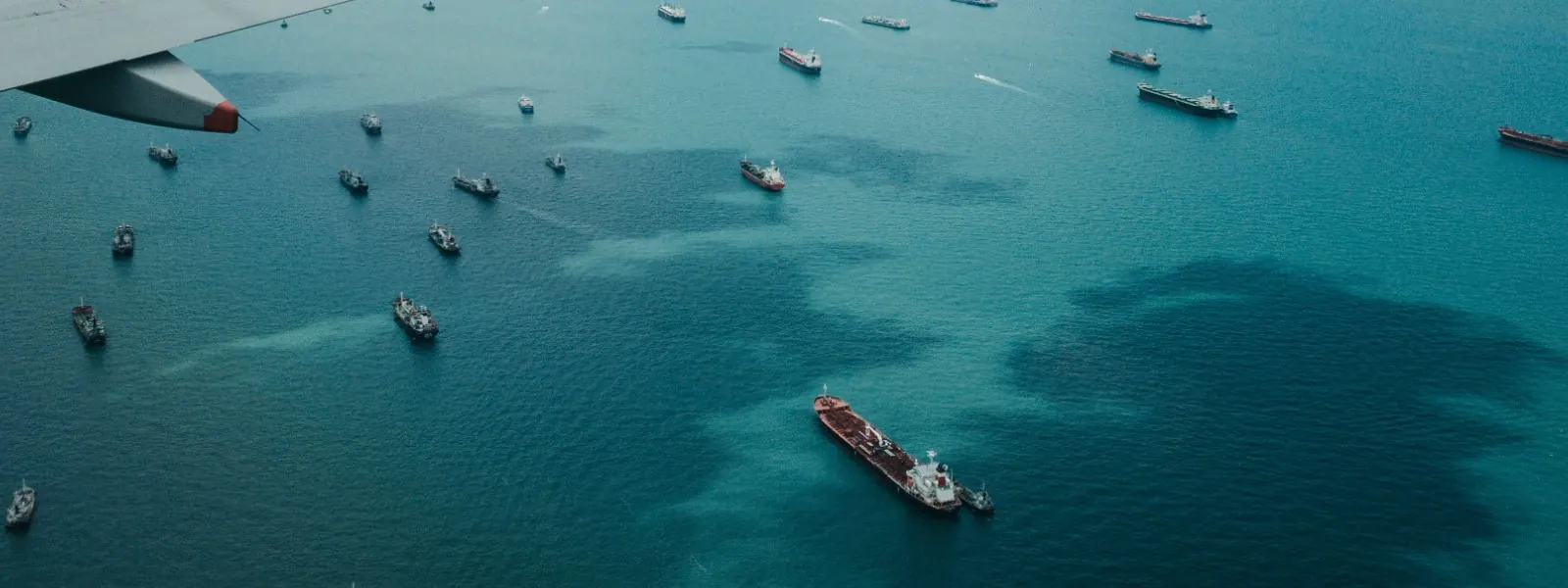
Where the positions physically come from
Ask whether the provider operates the receivers or licences the feed from someone who does, and whether that answer holds in every region or only some of them. Then ask what survives to your side: the position alone, or the station that collected it and the time it arrived. A blended feed can be entirely sound data. The point is knowing when you are buying one, because it determines who can be asked when a track looks irregular.
Latency, and the point at which the clock starts
Latency is quoted from different starting points, so establish what is being measured, and between which two points. Antenna to your endpoint is the figure that matters when screening a vessel still under way. Ask about historical retrieval separately, because a fast live feed and a slow archive frequently sit inside one product, and investigations run on the archive.
Delivery formats, and the integration they imply
A dashboard is quick to procure and difficult to build on. Where screening logic, case management and a data warehouse already exist, ask for raw feeds, an API and a stream, and confirm that the fields you adjudicate on survive each format. Ask specifically what becomes of reception metadata, which is usually the first thing a simplified format drops.
Coverage in your waters, not coverage in general
A global figure says little about the anchorages, straits and transfer zones where your own exposure sits. Name those areas and ask for evidence in them. This matters more in compliance than anywhere else, because thin coverage in an evasion hotspot presents as an absence of activity, and that is the most costly way for a feed to be wrong.
Whether the infrastructure is genuinely independent
Where two providers on a shortlist draw on the same upstream source, a second subscription buys a second interface rather than a second opinion. Wherever a check is meant to corroborate a finding, ask whose receivers sit beneath it. Independence is the entire reason a second source is worth funding, and it is a fair question for every vendor under evaluation.
How spoofing and interference are separated
Ask what happens when a reported position and the reception geometry disagree, and whether what arrives is a conclusion or the evidence behind it. Establish whether deliberate manipulation is distinguished from regional GNSS interference, which currently makes compliant vessels in the Baltic and Black Sea appear to be evading, and whether the reasoning can still be reproduced a year later, after models have been retrained. Flagging an anomaly is common. Evidencing it is not.
How we answer those
questions ourselves.
Every receiving station runs the same dedicated, standardised hardware, encrypting each message at the moment of capture.
Collect
Our own network
Terrestrial and ship-borne, plus satellite feeds stations that we operate, returning 100,000+ vessels and 49M+ AIS positions a day across 40+ countries, and reaching your endpoint in under 5 seconds.
Score
Evidence on every position
Nanosecond time-stamped, attributed to the station that collected it, and given a trust score by our anomaly detection models, so manipulated signals surface with the reasoning visible.
Deliver
Into what you already run
Raw NMEA over TCP, a REST API, a WebSocket stream, and SAPIENT compliant output to the BSI Flex 335 interface. Nothing here asks you to replace a screening platform. It feeds the one you have.
How Worldwide AIS Network compares.
The questions worth putting to every provider on the shortlist, ourselves included.
| What to check | What to ask any provider | Worldwide AIS Network |
|---|---|---|
| Where the data comes from | Do you operate the receivers yourselves, or buy and blend feeds from others? | Our own independent physical infrastructure. Terrestrial and ship-borne, plus satellite feeds. |
| Provenance on each position | Can you tell me which receiver collected this specific position, and when? | Every position carries its originating receiver and a nanosecond time stamp. |
| Handling of spoofing | How do you detect a manipulated or spoofed position before it reaches me? | Anomaly detection models assess the validity of every position in real time. |
| Latency | What is the delay from reception to the data being available in my system? | Under five seconds, antenna to API. |
| Delivery formats | Which formats do you deliver, and will they drop into what I already run? | Raw NMEA over TCP, REST API, WebSocket stream, and SAPIENT compliant output to BSI Flex 335. |
| Coverage where it matters to you | Can you show me real data for my specific waters before I commit? | 100,000+ vessels a day across 40+ countries. Ask for a sample of your own area. |
| Running alongside what you have | Can I add you next to my current provider rather than replacing it? | Yes. Running side by side is the intended pattern, not a compromise. |
We have deliberately not filled in a column for any other provider. Coverage, latency and sourcing change, and a claim we cannot evidence is worth nothing to you. Put these questions to everyone you are evaluating and compare the answers yourself.
Questions we get from teams mid-evaluation.
Can we run Worldwide AIS alongside our existing provider?
Yes, and that is the pattern we are built for. Two independent sources are what give a corroborating check its value: an independent record either supports a dark activity or spoofing flag or it does not, and both outcomes inform the next step. Adding us requires removing nothing, and the usual starting point is a narrow slice, typically the alerts that lead to a held payment or a refused fixture.
How much work is it to integrate?
That depends on where the data needs to land. Where a screening stack or a warehouse is already queried, the REST API and the WebSocket stream are the usual routes, and raw NMEA over TCP serves teams that want the messages untouched. Nothing requires you to move risk logic, adopt an interface or rebuild a workflow, because what we supply is the positions and the reception record, not a platform to view them in.
Do we have to switch providers to work with you?
No. Migrating an entire programme at once is a substantial decision, and rarely the one actually in front of a compliance team. The narrower question, whether an independent record belongs beneath your highest consequence adjudications, is easier to test and easier to reverse. Should more of your screening later rest on our network, that decision is taken on evidence.
How do we compare two AIS data providers fairly?
Take cases you have already adjudicated, ideally several where the outcome was contested or the vessel sat in a difficult area, and run the same vessels and windows through each provider under consideration. Compare the underlying positions and the metadata rather than the conclusions, and record how often each source allows you to explain how it reached its answer. A demonstration on a clean case establishes far less.
Do you cover the waters we actually screen?
Our network covers 40+ countries and continues to expand, but for specific straits, anchorages or transfer zones the accurate answer is to ask us about those areas by name. We would rather state where coverage is thin than have you discover it during an investigation. Send the regions that matter to your programme and we will confirm what we can and cannot see there.
The full detail for this sector.
This page concerns the evaluation. The sector itself, how vessel screening, Know Your Vessel checks and audit evidence work on our data, is documented in full here.
Comparing for another sector


Worth an hour of your evaluation.
Send an IMO number for a vessel you have already worked through, and reconcile what our own network sees against the record you already hold.
Re-check a vessel you flagged