Why Your Enterprise Needs a Low-Latency AIS Data API
- Team WAKE

- Feb 24
- 3 min read

In maritime enterprise, timing is rarely a detail. It is the difference between margin and loss, between smooth port calls and costly congestion, between early warning and public incident. A low-latency AIS data API for enterprise is not a technical luxury. It is essential infrastructure.
Across trading desks, operations centers, and risk departments, decisions are increasingly driven by live vessel intelligence. When data arrives late, it does not simply arrive slower. It arrives weaker. By the time it is processed, the market may have moved, the berth may be reassigned, or the risk may already have materialized.
Why Latency Defines Competitive Advantage
Automatic Identification System signals were designed for collision avoidance. In today’s enterprise environment, they underpin supply chains, commodity pricing models, emissions reporting, and maritime security frameworks. The value of that signal depends on how quickly it can be captured, processed, and delivered.
In commodity markets, vessel position and estimated time of arrival influence pricing models for crude, LNG, grains, and refined products. A cargo approaching Rotterdam or Singapore can shift regional supply expectations within minutes. For firms exposed to freight derivatives or physical cargo positions, delayed AIS feeds translate directly into financial exposure.
In logistics and supply chain management, live tracking enables dynamic route adjustments when weather systems build in the North Atlantic or congestion escalates in the Singapore Strait. Accurate, second-level updates improve berth planning, reduce demurrage risk, and sharpen customer communication. Outdated data forces planners to rely on assumptions rather than facts.
Security and compliance teams operate under similar pressure. Suspicious loitering, AIS gaps, identity inconsistencies, or unexpected course deviations must be detected in real time to support sanctions screening and internal compliance frameworks. When alerts are delayed, response windows narrow.
The same principle applies to emerging autonomous and remotely operated vessels. Real-time situational awareness depends on continuous, low-latency data streams. Any delay introduces operational risk.
High latency quietly converts operational intelligence into historical reporting. In enterprise maritime environments, that is a cost few can afford.
What an Enterprise-Grade Low-Latency AIS Data API Must Deliver
Not every AIS feed is built for enterprise decision-making. A low-latency AIS data API for enterprise must meet stringent standards across infrastructure, data quality, and integration.
Data freshness sits at the core. The interval between a vessel transmitting its AIS message and that data being accessible through the API should be measured in seconds. Achieving this requires optimized ingestion pipelines, edge processing, and efficient routing from terrestrial and satellite receivers to end users.
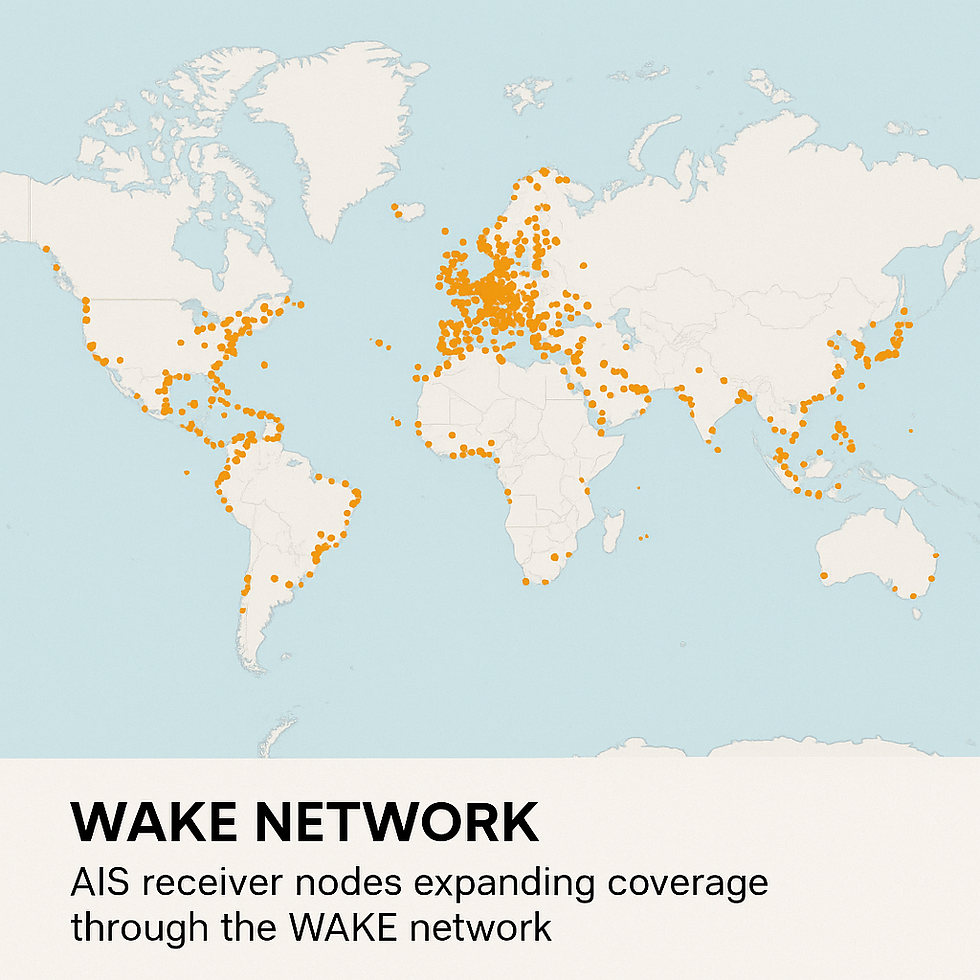
Global coverage is equally critical. Dense terrestrial networks are essential in high-traffic corridors such as the English Channel and the South China Sea, while satellite AIS extends visibility into remote ocean regions where terrestrial signals fade. A fragmented network introduces blind spots. Enterprise users need continuity across trade lanes, chokepoints, and open ocean routes.
Reliability under load separates serious providers from experimental platforms. Enterprise applications often require high query volumes, persistent streaming connections, and guaranteed uptime. Infrastructure must be redundant, geographically distributed, and engineered for resilience.
Data quality cannot be an afterthought. Raw AIS transmissions frequently contain duplicate messages, positional noise, or inconsistent identifiers. An enterprise-grade API should clean, validate, and enrich this data before delivery, reducing the burden on internal analytics teams and improving downstream model performance.
Scalability determines whether a solution remains viable as operations expand. As fleets grow or analytical models become more sophisticated, the API must support higher throughput without degradation in response time.
Integration also matters. Clear documentation, consistent endpoint structures, and support for both REST queries and streaming protocols such as WebSockets allow development teams to deploy quickly and maintain control over their architecture.
Security standards must align with enterprise governance. Encryption in transit, robust authentication, and compliance with data protection requirements are baseline expectations.
Turning Data Into Operational Leverage
A well-architected low-latency AIS data API does more than provide vessel positions. It becomes a live intelligence layer across the organization.
Traders gain earlier visibility into cargo flows and port congestion patterns. Operations teams refine scheduling with confidence. Risk departments monitor sanctioned activity or irregular behavior in near real time. Executive leadership benefits from dashboards that reflect the present rather than the past.
The strategic impact compounds over time. Faster information supports faster decisions. Faster decisions improve asset utilization, reduce financial exposure, and enhance client trust.
Conclusion
The maritime sector has entered an era where data velocity is as important as data volume. A low-latency AIS data API for enterprise ensures that vessel intelligence arrives when it still matters.
For organizations operating in freight markets, global logistics, maritime finance, or compliance, investing in low-latency AIS infrastructure is not an upgrade. It is a structural advantage. In a market defined by movement, the enterprises that move first are the ones that win.


Comments