Identifying Shadow Fleet Vessels Using AIS: A Strategic Framework for Compliance and Risk Leaders
- Team WAKE

- Feb 22
- 6 min read
Updated: Feb 25

The Rise of the Shadow Fleet
More than 80 percent of global trade by volume moves by sea. Maritime shipping underpins energy markets, commodity flows, and industrial supply chains across every major economy. As geopolitical tensions intensify and sanctions regimes expand, maritime transparency has become a strategic priority for governments and corporations alike.
In this environment, the shadow fleet has grown rapidly. These vessels operate with the intent to obscure ownership, manipulate identity, and conceal trade flows. Their activity is closely associated with sanctions evasion, opaque energy trades, and elevated environmental risk.
For compliance officers, risk managers, maritime intelligence teams, and government agencies, identifying shadow fleet vessels using AIS is now a core capability. It requires more than simple vessel tracking. It demands structured data analysis, behavioral modeling, and verified maritime intelligence infrastructure.
Advanced AIS data analysis provides one of the most effective methods to detect deceptive maritime behavior. When combined with ownership data, registry information, and satellite intelligence, AIS becomes a powerful enforcement and risk management tool.
What Is the Shadow Fleet and Why Is It a Problem?
Defining the Shadow Fleet
The shadow fleet refers to vessels that operate in ways designed to obscure commercial activity or evade regulatory oversight. These vessels are frequently linked to sanctioned oil trades and high risk cargo movements.
Common characteristics include:
Older tankers, often exceeding 15 to 25 years of age
Registration under single vessel corporate entities
Frequent changes of flag state
Complex and opaque ownership structures
Limited transparency around insurance and classification
Repeated AIS manipulation patterns
Although most commonly associated with crude oil and refined product transport, similar behavior patterns appear in other commodity sectors.
Why This Matters for Enterprises and Governments
The risks extend well beyond maritime operations.
Sanctions Exposure
Financial institutions, insurers, charterers, and commodity traders face material regulatory risk if they engage with sanctioned vessels or counterparties. Identifying high risk vessels early reduces legal and financial exposure.
Environmental and Operational Risk
Aging vessels with limited oversight increase the probability of spills and accidents. Insurance underwriters must evaluate structural integrity risk alongside behavioral signals.
Illicit Trade and Security Concerns
Shadow fleet vessels can facilitate the movement of prohibited goods, dual use materials, or restricted energy products. For government agencies, maritime domain awareness depends on early identification.
Market Transparency Distortion
Opaque energy flows affect pricing models and supply demand forecasting. For commodity traders and analysts, understanding real vessel movements is critical.
Identifying shadow fleet vessels using AIS is therefore not only a compliance exercise. It is a strategic intelligence function.
Using AIS Data to Identify Shadow Fleet Vessels
AIS provides continuous streams of vessel identity, position, speed, and navigational status. The value lies not in the signal itself, but in how it is analyzed.
Red Flags in AIS Data
AIS Gaps in High Risk Regions
One of the most common indicators of deceptive activity is prolonged AIS silence near sanctioned export terminals or high risk waters.
Risk indicators include:
Transmission loss close to sanctioned ports
Reappearance after extended periods with increased draft
Reemergence near known offshore transfer zones
Temporary AIS gaps can occur due to technical issues or satellite coverage limitations. The analytical task is to distinguish operational anomalies from deliberate concealment.
High quality AIS datasets support:
Gap duration scoring models
Geofenced monitoring around sensitive regions
Historical baseline comparison
AIS Spoofing and Identity Manipulation
AIS identity fields such as MMSI, IMO number, and vessel name can be altered.
Warning signals include:
Duplicate IMO numbers detected in different geographies
Rapid name changes without registry confirmation
Inconsistent vessel dimensions or type codes
Position jumps inconsistent with physical speed constraints
Spoofing often involves short term identity borrowing followed by reversion. Without deep historical AIS archives, these inconsistencies can remain undetected.
Unusual Voyage Patterns
Shadow fleet vessels frequently demonstrate:
Indirect routing between origin and destination
Offshore loitering in low traffic zones
Mid voyage draft changes
Repeated minor port calls inconsistent with declared cargo
Behavioral analytics can quantify:
Route efficiency deviation
Speed profile anomalies
Voyage clustering patterns
Repeated deviations often indicate concealed transfers or cargo origin masking.

Ship to Ship Transfers in Suspicious Locations
Ship to ship transfers are legitimate in many energy logistics operations. However, risk increases when transfers occur:
In international waters outside established hubs
Near sanctioned regions
During AIS silence windows
With counterpart vessels that exhibit high risk behavior
AIS analytics can detect prolonged low speed proximity events and coordinated silence patterns. These signals are central to shadow fleet detection models.
Behavioral Analytics: Moving Beyond Individual Signals
Isolated red flags generate noise. Effective identification requires structured behavioral analysis.
Vessel Lifecycle Analysis
Shadow fleet vessels often show a clear transition pattern:
Operation under reputable ownership
Sale to opaque entity
Flag state change
Increase in AIS gaps and offshore transfers
Historical AIS analysis enables:
Pre and post acquisition behavioral comparison
Flag change frequency assessment
Longitudinal routing evaluation
Behavioral divergence is often more telling than any single event.
Ownership and Registry Cross Referencing
AIS data becomes more powerful when enriched with:
Corporate registry data
Classification records
Insurance information
Sanctions lists
Correlating behavioral anomalies with registry irregularities reduces false positives and strengthens risk scoring models.
Network and Counterparty Analysis
Shadow fleet activity frequently involves clusters of vessels and entities.
Network analysis can identify:
Recurrent ship to ship counterparties
Shared port rotation patterns
Overlapping directors across shell companies
Common identity manipulation patterns
The Role of Verified AIS Data
Data quality directly affects risk outcomes.
Low integrity AIS feeds can introduce:
Duplicate position reports
Inconsistent timestamps
Unfiltered spoofed identities
Coverage gaps
For enterprise compliance teams, inaccurate signals translate into wasted investigation resources and potential exposure.
Verified AIS data infrastructure should include:
Combined terrestrial and satellite coverage
Timestamp normalization
Signal validation algorithms
Deduplication logic
Persistent vessel identifiers
Reliable data reduces false ship to ship detections and improves dark activity classification accuracy.
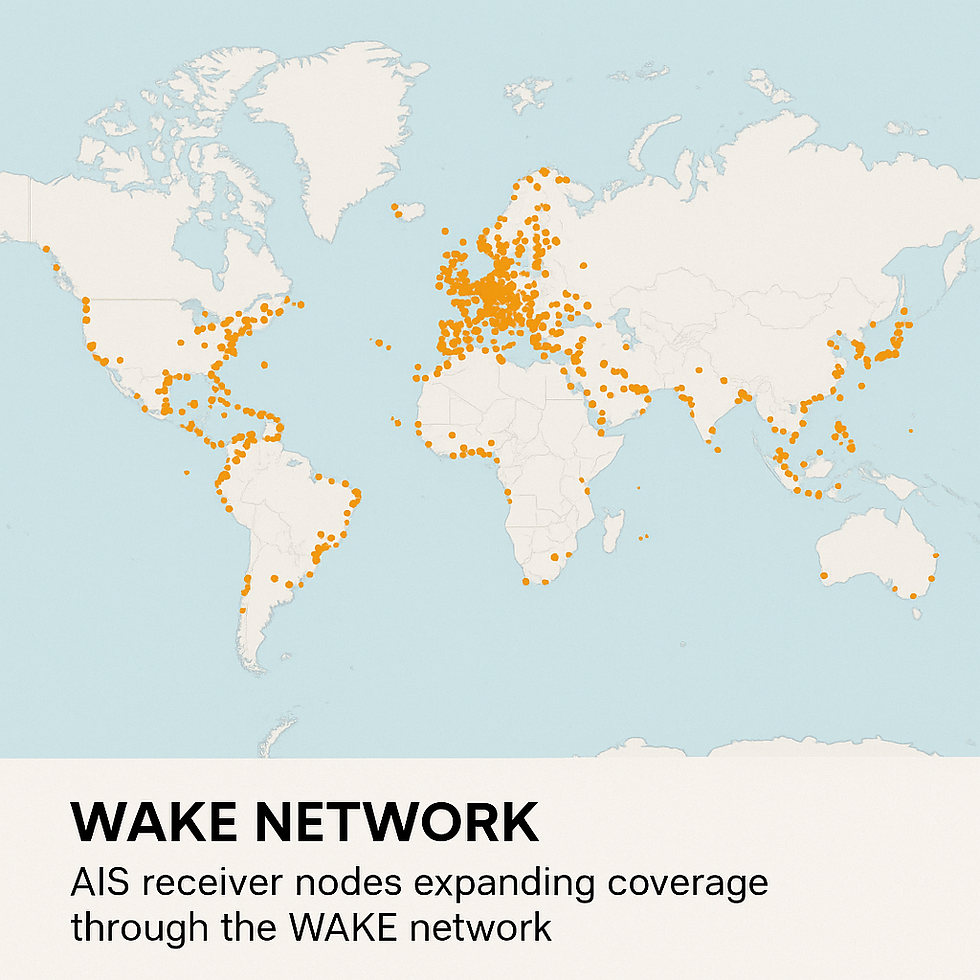
Worldwide AIS provides verified real time and historical AIS datasets designed for enterprise use. Data pipelines are engineered for sanctions monitoring, maritime risk scoring, and regulatory reporting. For organizations building automated compliance workflows, verified AIS is foundational.
Hypothetical Case Study: Detecting a High Risk Tanker
Scenario
A global trading firm monitors crude exports from a sanctioned region. An aging Aframax tanker appears in routing models.
Step 1: AIS Gap Detection
The vessel departs a neutral port and approaches a sanctioned terminal.
AIS transmission ceases within proximity of the terminal and resumes three days later. Draft readings increase significantly.
Risk indicator: High probability of concealed loading.
Step 2: Offshore Proximity Event
Shortly after reappearance, the tanker slows and maintains close proximity with another vessel offshore. The counterparty has a history of dark activity.
Risk indicator: Potential ship to ship transfer.
Step 3: Registry and Ownership Review
Analysis reveals:
Two flag changes within eighteen months
Ownership transferred to a newly incorporated entity
Limited insurance transparency
Risk indicator: Elevated structural risk.
Step 4: Historical Behavior Comparison
Prior to ownership change:
Direct routing
No AIS silence
No offshore loitering
After ownership change:
Repeated dark activity
Multiple offshore proximity events
Routing inefficiencies
The behavioral shift is statistically significant.
Outcome
The compliance team classifies the vessel as high risk and blocks commercial engagement. The case is escalated internally and documented for regulatory reporting.
This workflow demonstrates how identifying shadow fleet vessels using AIS becomes a structured analytical process supported by verified data and behavioral modeling.
Strategic Implications for Decision Makers
The expansion of the shadow fleet reflects deeper structural changes in global trade.
Sanctions driven trade realignment, fragmented energy markets, and increased geopolitical risk have elevated the importance of maritime intelligence.
Organizations that lack reliable vessel visibility face:
Regulatory penalties
Counterparty risk exposure
Reputational damage
Financial loss
Organizations that deploy advanced AIS analytics gain:
Real time maritime risk awareness
Automated compliance triggers
Enhanced trade flow transparency
Competitive intelligence advantage
AIS data is no longer a simple tracking feed. It is critical infrastructure data that supports commodity flow modeling, insurance underwriting, enforcement activity, and ESG oversight.
In a market shaped by opacity and geopolitical uncertainty, data driven maritime transparency is a strategic asset.
Conclusion
The shadow fleet will continue to evolve. Identity manipulation methods will become more sophisticated. Routing strategies will adapt.
Identifying shadow fleet vessels using AIS requires:
Verified, high quality AIS data
Deep historical archives
Structured behavioral analytics
Cross dataset enrichment
Enterprise grade data infrastructure
For compliance officers, maritime analysts, risk managers, and government agencies, detection capability must be proactive rather than reactive.
Worldwide AIS delivers verified AIS data engineered for high risk maritime intelligence use cases.
Organizations that treat AIS as strategic trade intelligence infrastructure will be better positioned to manage sanctions exposure, protect supply chains, and maintain regulatory integrity in an increasingly complex maritime environment.


Comments